
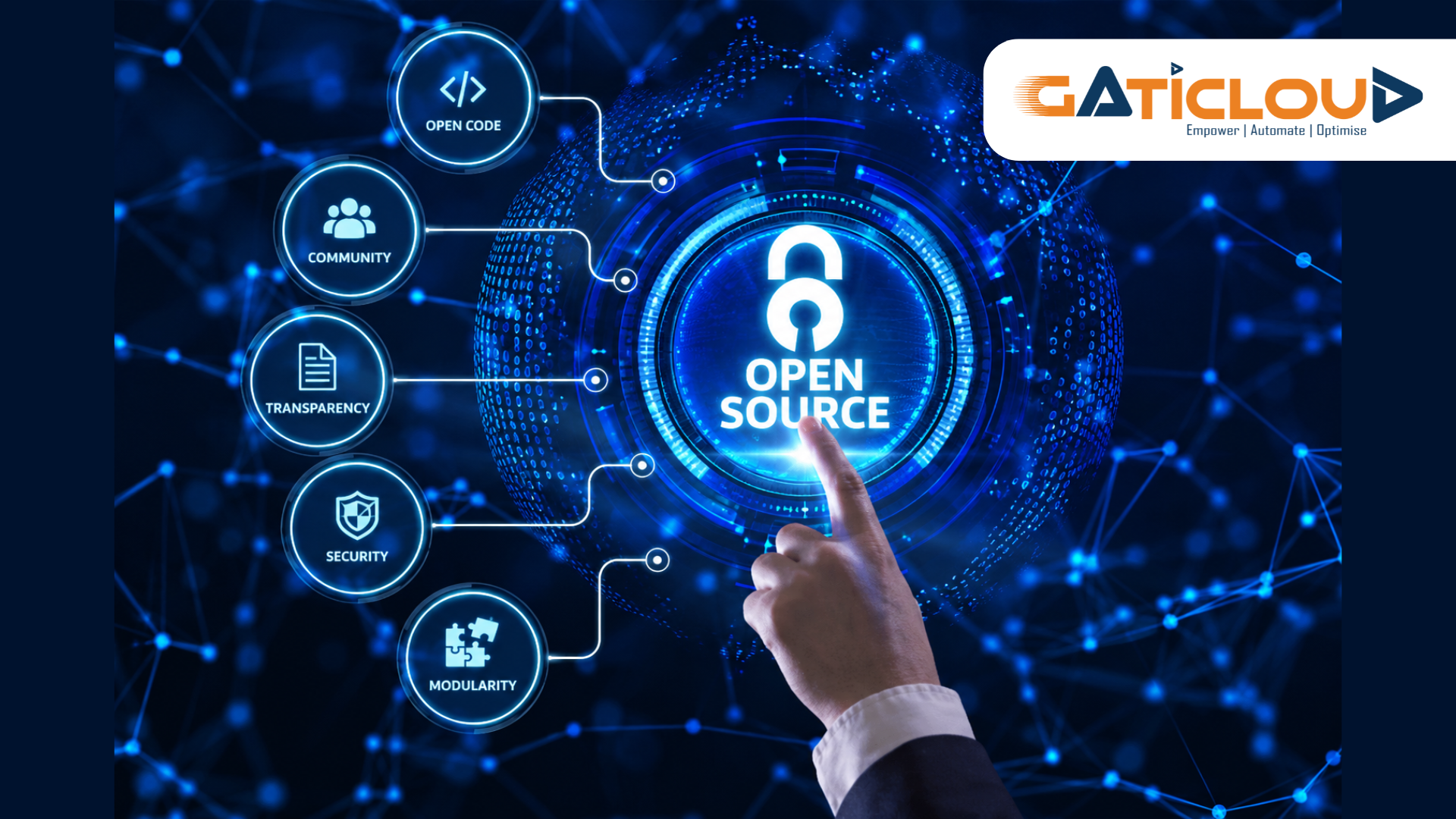
Open cloud and zero lock‑in are not just buzzwords for us at GatiCloud, they are how we believe Indian teams should build, scale, and stay in control of their applications in 2026 and beyond. “O – Open Source” in our SCOPE framework is our promise that your code, data, and architecture remain truly yours, even as you grow on an India‑first cloud.
What we mean by “open cloud, zero lock‑in”
When we say “open cloud, zero lock‑in,” we mean a cloud that is built on open‑source technologies and open standards, not closed, proprietary black boxes.
In simple terms, this looks like:
- Using popular open‑source components and cloud‑native tools instead of custom, provider‑only services.
- Supporting standard APIs, formats, and protocols, so your workloads are portable across environments.
- Making it easy to back up, export, and migrate data and workloads without hidden penalties or traps.
Many clouds quietly push you towards their own proprietary databases, queues, and monitoring tools. We want to be the opposite: a cloud where you get Indian, high‑performance infrastructure without giving up your freedom to choose and change.
Why open-source matters more in India in 2026
India’s digital economy is growing fast, and three big trends make open source and open cloud more important than ever.
- Data sovereignty and digital independence
With DPDP and sector‑specific regulations, Indian companies think hard about where their data lives and who controls the underlying infrastructure. Open‑source‑driven cloud and open infrastructure reduce dependence on a single foreign vendor and give more long‑term options.
- Cost pressure and frugal innovation
Startups and SMEs want powerful cloud infrastructure, but they also need predictable bills and the ability to optimize costs over time. Open‑source components let teams tune, self‑host, or mix services across providers instead of being locked into one expensive path.
- Talent and community
Most Indian developers and DevOps engineers already work on open‑source stacks—Linux, Kubernetes, PostgreSQL, MySQL, Redis, Kafka, and many more. An open cloud that speaks the same language as your team means faster onboarding, richer community support, and fewer surprises.
For GatiCloud, “Open Source” is about meeting Indian builders where they already are on open tools and open standards and giving them a cloud that respects those choices.
How GatiCloud puts “Open Source” into practice
GatiCloud is an India‑focused, automated cloud platform built on open‑source technologies to give you transparency, portability, and freedom from lock‑in.
- Cloud‑native by design
You can run containerized workloads, Kubernetes clusters, and microservices using industry‑standard patterns. There is no dependence on a proprietary orchestrator that works only in one ecosystem.
- Open‑source databases and tooling
You can keep using familiar open‑source databases and data tools, so you don’t have to rewrite your application for a closed, single‑vendor database. This makes scaling simpler and reduces the risk of expensive rewrites later.
- Standard interfaces and APIs
You interact with instances, storage, backups, and networking through APIs and workflows grounded in open cloud principles. This makes it easier to connect your CI/CD, observability, and automation pipelines.
- Portability across environments
Because the underlying stack is open and standards‑based, you can move workloads between on‑prem, other clouds, and GatiCloud more easily as your strategy evolves. Our goal is that you never feel trapped by one‑way migrations or closed formats.
Open source plus India‑first infrastructure
Open source alone is not enough. You also need infrastructure that understands India’s realities: latency, regulations, and growth patterns.
- India‑aware performance
GatiCloud focuses on India-optimized regions and networking, so your open‑source stack delivers low‑latency experiences for users across the country. This matters for SaaS products, ERPs, HRMS systems, and consumer apps that serve Indian customers.
- Data sovereignty and localization
Our infrastructure aligns with India’s data sovereignty journey, making it easier to keep sensitive workloads local while using your preferred open‑source tools. That helps with DPDP compliance and sector‑specific expectations around localization.
- Transparent, predictable pricing
We pair open‑source flexibility with transparent, predictable pricing, so you can scale your open‑source workloads without bill shock and still retain freedom to adjust your architecture as needs change.
Example: An Indian SaaS team on an open stack
Imagine a SaaS team in Bengaluru building a B2B product for Indian SMEs.
Their typical stack may include:
- Backend: Node.js or Java Spring Boot on Linux
- Database: PostgreSQL or MySQL
- Messaging: Redis or Kafka
- Infra: Kubernetes or container‑based deployment with CI/CD
- Observability: open‑source tools for logs, metrics, and tracing
On a tightly coupled, proprietary cloud, this team might feel pressure to adopt closed databases, event systems, or monitoring tools “for convenience,” only to realize a few years later that moving away is extremely hard and expensive.
On GatiCloud, the same team can:
- Keep their open‑source stack intact.
- Run on India‑optimized, sovereign infrastructure.
- Use standard cloud‑native patterns that work across environments, reducing long‑term lock‑in risk.
That is “open cloud, zero lock‑in” in action for Indian SaaS builders.
Why this matters for your future self
Day-to-day, it is easy to focus only on the next release. But most infra regrets appear 2–3 years later, when:
- New regulations demand data localization or stricter controls.
- Cloud bills spike and the “easy” options are all locked into one provider.
- You want multi‑cloud or hybrid options, but your stack is tied to proprietary services.
Choosing an open, standards‑based, India‑first cloud early gives your future self-more options to re‑architect, negotiate, diversify, or comply with new rules without starting from scratch. For us at GatiCloud, Open Source is both a technical choice and a long‑term independence strategy for Indian businesses.
We want to learn from the real builders in India – Engineers, SREs, DevOps teams, Architects, and CTOs.
Which open‑source stack are you using today, and why did you choose it?
Is it PostgreSQL or MySQL? Kubernetes or a simpler container setup? Kafka, Redis, RabbitMQ, or something else?
If you are exploring an open‑source‑driven cloud in India that offers high performance, data sovereignty, and zero lock‑in, book a free architecture session with the GatiCloud team and let’s map your stack to an open cloud that keeps you in control.
